
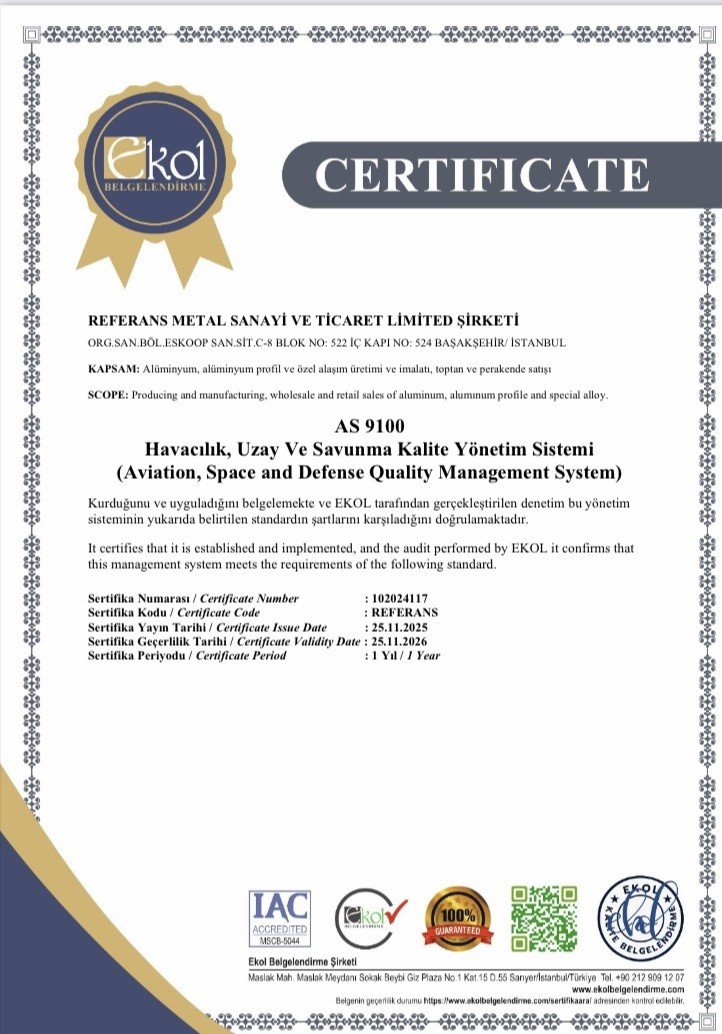
 AS 9100
 SPACE 2009
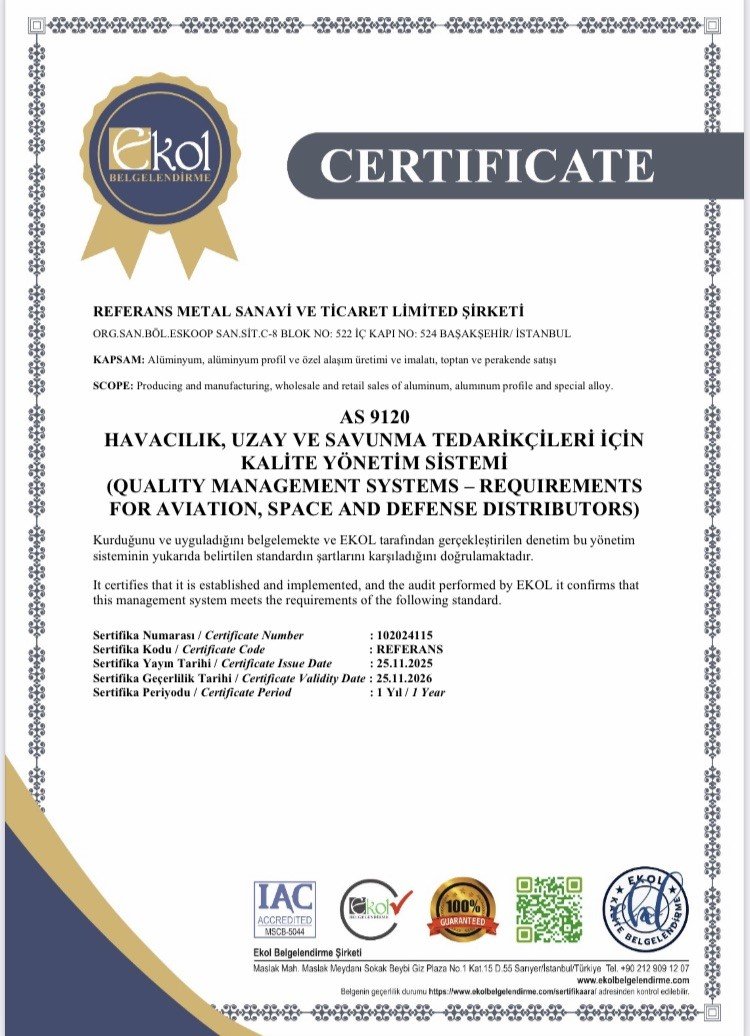 AS 9120




2219
UNS A92219 / AlCu6Mn / 2219 / T3
| Chemical Properties | % Value |
| Silicon (Si) | 0,00 - 0,20 |
| Manganese (Mn) | 0,20 - 0,40 |
| Magnesium (Mg) | 0,00 - 0,02 |
| Copper (Cu) | 5,80 - 6,80 |
| Titanium (Ti) | 0,00 - 0,15 |
| Iron (Fe) | 0,00 - 0,30 |
| Zinc (Zn) | 0,00 - 1,00 |
| Aluminium (Al) | Balance |
| Physical Properties | Value |
| Density | 2.84 g/cm³ |
| Melting Point | 543 °C |
| Thermal Expansion | 22 µm/m.°C |
| Modulus of Elasticity | 74 GPa |
| Thermal Conductivity | 170 W/m.K |
| Electrical Resistivity | 44% IACS |
| Mechanical Properties | Value |
| Yield Strength | 220 MPa |
| Ultimate Strength | 330 MPa |
| Shear Strength | 200 MPa |
| Elongation A50 mm | 13% |
| Hardness | 100 HB |
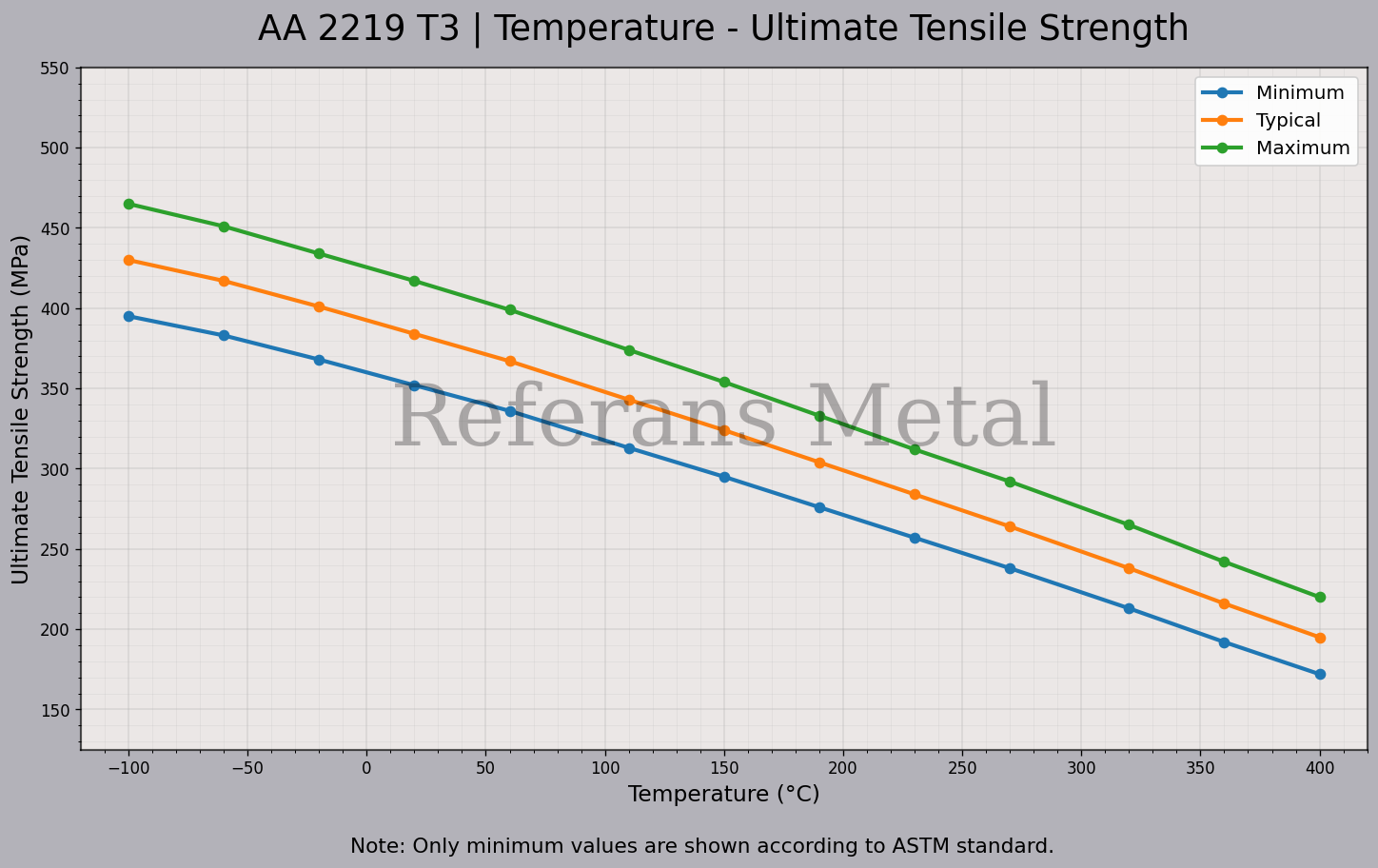
| 2219 T3 Temperature – Ultimate Tensile Strength Graph |
 |
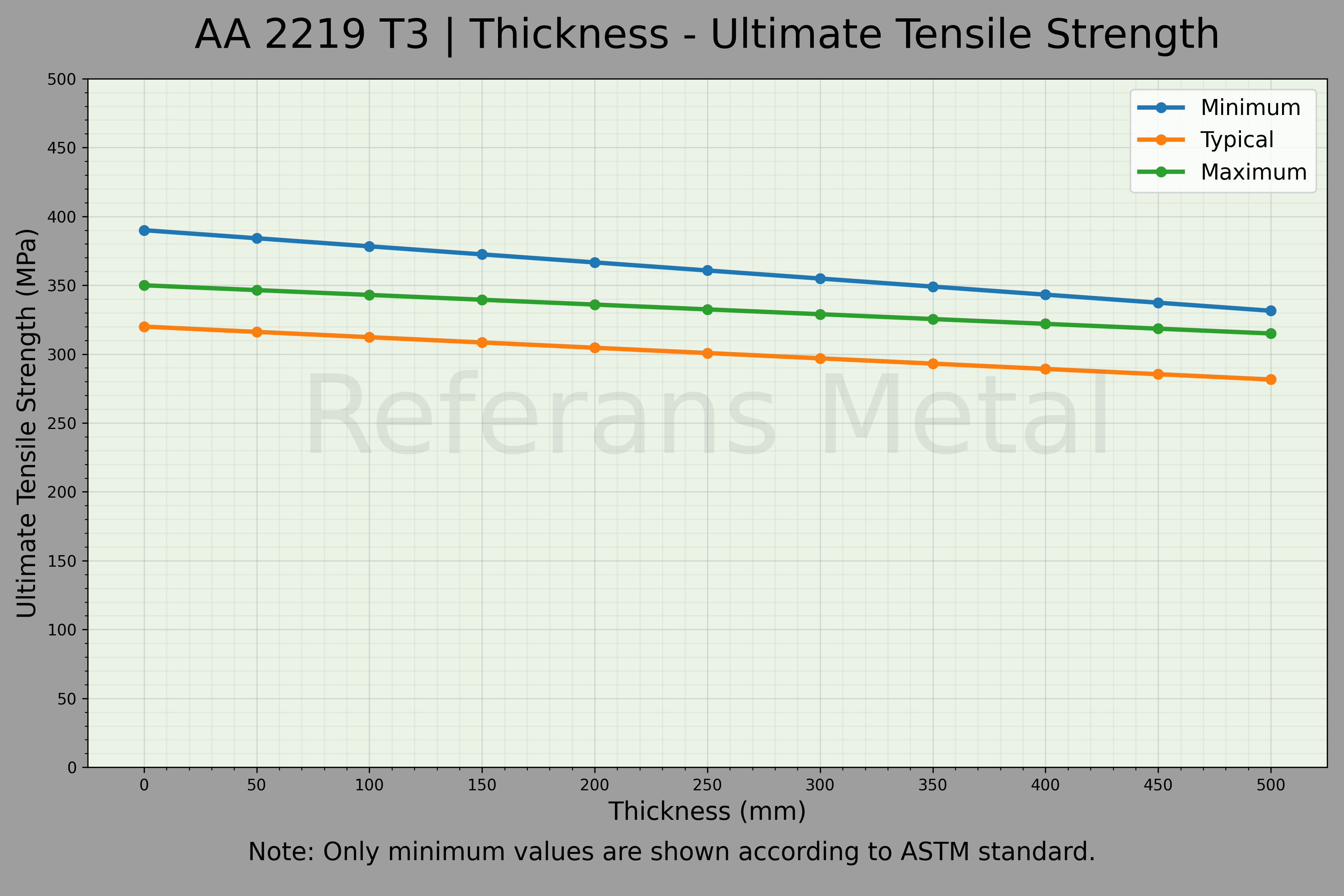
| 2219 T3 Thickness – Ultimate Tensile Strength Graph |
 |
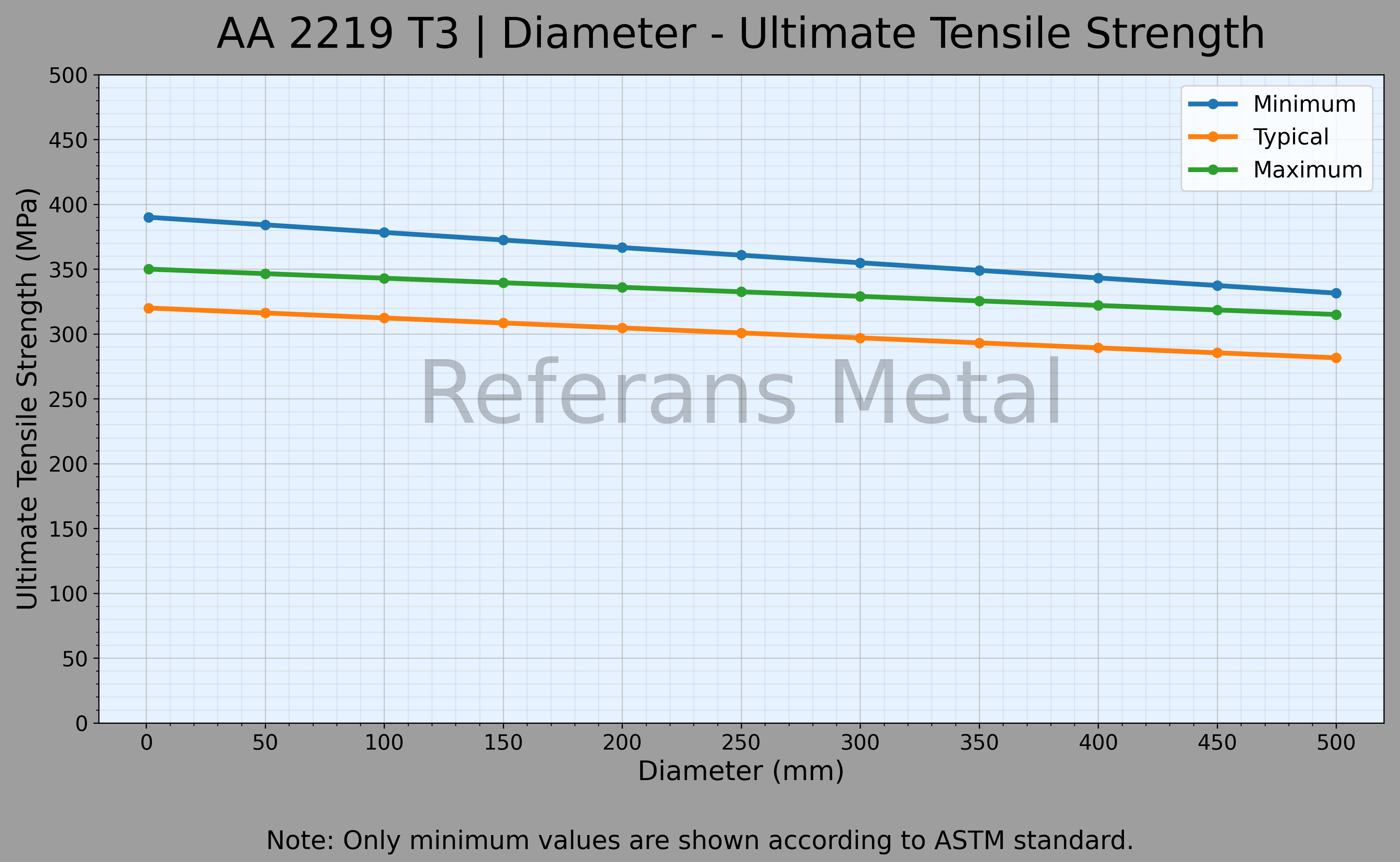
| 2219 T3 Diameter – Ultimate Tensile Strength Graph |
 |
The 2219 T3 aluminum alloy is a copper-based wrought alloy specifically developed for applications requiring high-temperature resistance and structural strength. In the T3 temper condition, it is solution heat-treated and naturally aged, providing a balanced combination of strength and ductility. Alloy 2219 is widely used in the aerospace industry, particularly for cryogenic tanks, fuel containers, and structural components operating at elevated temperatures.
This alloy exhibits high strength, and one of its most significant advantages is its ability to retain mechanical properties at elevated temperatures. Compared to 2024-T3, 2219 T3 offers better high-temperature performance, while it has slightly lower room-temperature strength than 7075-T6 but significantly better weldability. Compared to 6061-T6, it achieves much higher strength levels, although it requires more careful surface protection due to its lower corrosion resistance.
In terms of corrosion resistance, 2219 alloy is not naturally high due to its copper content and is typically protected by surface treatments such as alclad coating or anodizing. Its coatability is quite good, responding well to such surface treatments. Its machinability is considered moderate; while it is not as machinable as 2011 alloy, it can still be processed efficiently with appropriate cutting parameters.
Its bending and forming properties are manageable in the T3 temper condition due to a certain level of ductility, but sharp bends must be performed carefully because of its high strength. Weldability is one of the key advantages of this alloy, offering significantly better welding performance compared to alloys like 7075, making it suitable for welded structures.
In terms of vibration and fatigue behavior, 2219 alloy demonstrates stable performance. Its resistance to vibration loads is particularly important in aerospace applications, and it meets these requirements effectively. Overall, 2219 T3 stands out as a critical material in rocket structures, spacecraft, pressure vessels, and defense applications due to its combination of high-temperature strength, good weldability, and high mechanical strength.
.
Material Composition Standards
2219 T3 aluminum alloy can comply with the following standards:
• 2219 T3 Sheet: ASTM B209, UNS A92219, AMS QQ-A-250/30A, ISO AlCu6Mn
• 2219 T3 Extruded Bar: ASTM B221, UNS A92219, ISO AlCu6Mn
• 2219 T3 Extruded Tube: ASTM B221, UNS A92219, ISO AlCu6Mn
• 2219 T3 Extruded Plate: ASTM B221, UNS A92219, ISO AlCu6Mn
• 2219 T3 Extruded Wire: ASTM B221, UNS A92219, ISO AlCu6Mn
Typical Properties of 2219 T3 Aluminum Alloy:
- Strength: Very good
- Machinability: Poor
- Weldability: Excellent
- Formability: Moderate
- Corrosion Resistance: Above average
- Heat Treatable: Yes
Some Typical Applications of 2219 T3 Aluminum Alloy:
Used for engineering structural components, widely applied in the aerospace industry, and used as material for aircraft structures and fuel tanks.
Available Stock Forms
2219 T3 is available in sheet, bar/plate, and tube/profile forms.
- Sheets
- Bars / Plates
- Tubes / Profiles
 Weight Calculator