
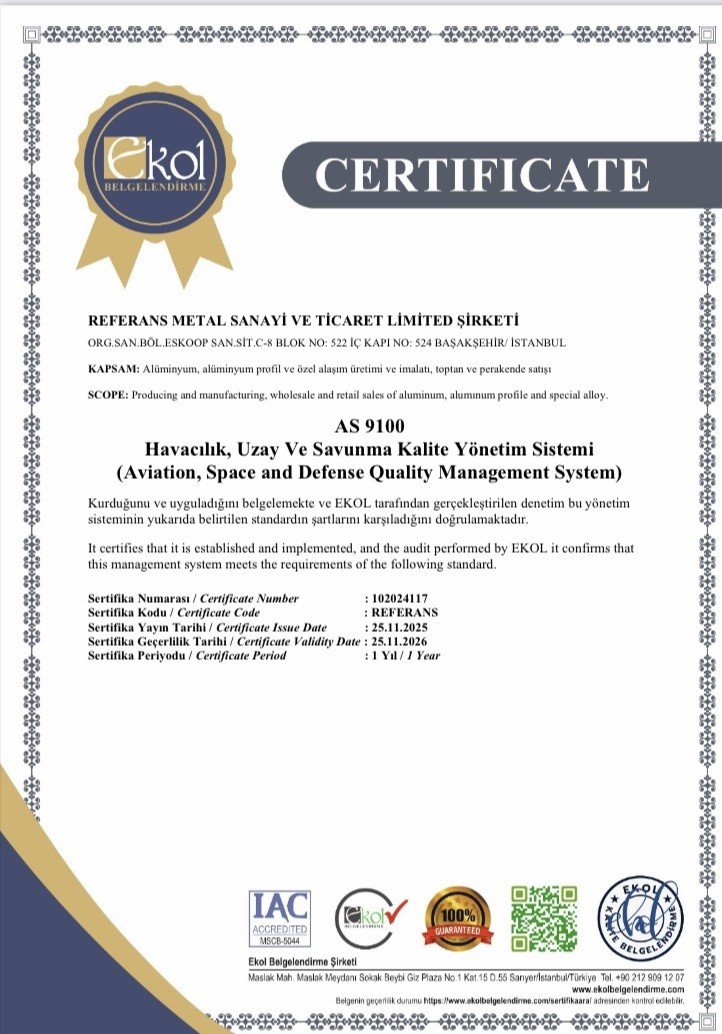
 AS 9100
 SPACE 2009
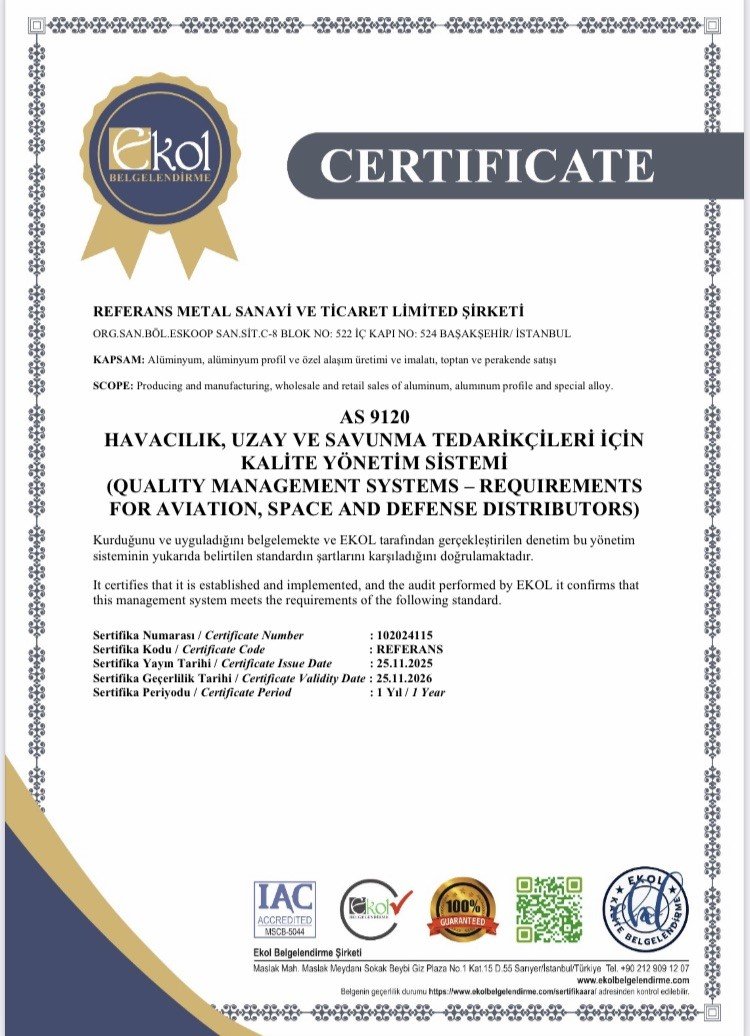 AS 9120




Plates
Sheets
Rod/Round Bar/Flat Bar
Tube/Extrusions/Profile
5083
ASME SB209 / AlMg4.5Mn0.7 / 5083 / H321
| Chemical Properties | % Value |
| Silicon (Si) | 0,00 - 0,40 |
| Chromium (Cr) | 0,05 - 0,25 |
| Magnesium (Mg) | 4,00 - 4,90 |
| Copper (Cu) | 0,00 - 0,10 |
| Titanium (Ti) | 0,00 - 0,15 |
| Iron (Fe) | 0,00 - 0,40 |
| Zinc (Zn) | 0,00 - 0,25 |
| Aluminium (Al) | Balance |
| Physical Properties | Value |
| Density | 2.66 g/cm³ |
| Melting Point | 574 °C |
| Thermal Expansion | 23.9 µm/m.°C |
| Modulus of Elasticity | 71 GPa |
| Thermal Conductivity | 120 W/m.K |
| Electrical Resistivity | 29% IACS |
| Mechanical Properties | Value |
| Proof Strength | 250 MPa |
| Yield Strength | 340 MPa |
| Shear Strength | 200 MPa |
| Elongation A50 mm | 13% |
| Hardness | 89 HB |
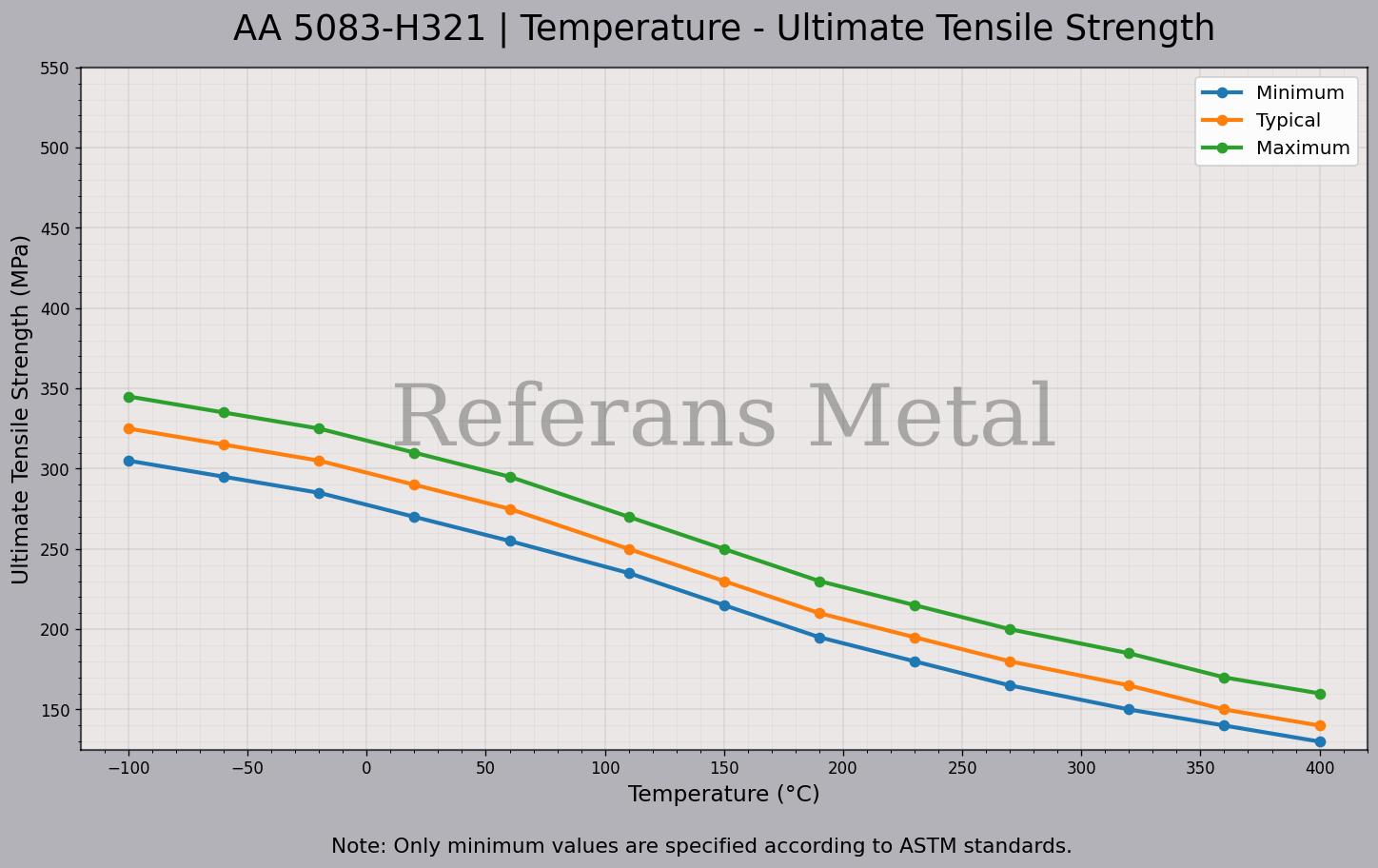
| 5083 H321 Temperature – Ultimate Tensile Strength Graph |
 |
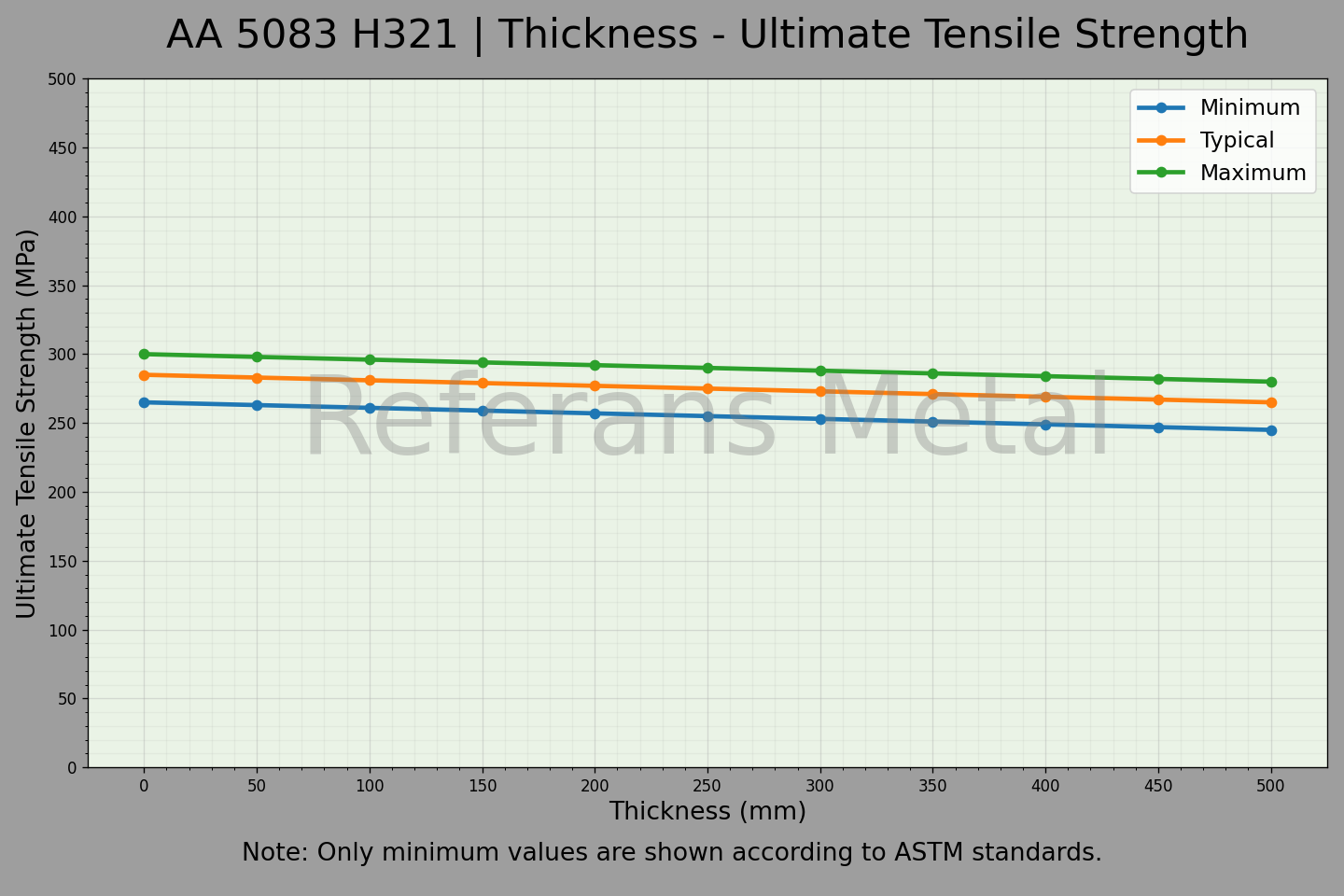
| 5083 H321 Thickness – Ultimate Tensile Strength Graph |
 |
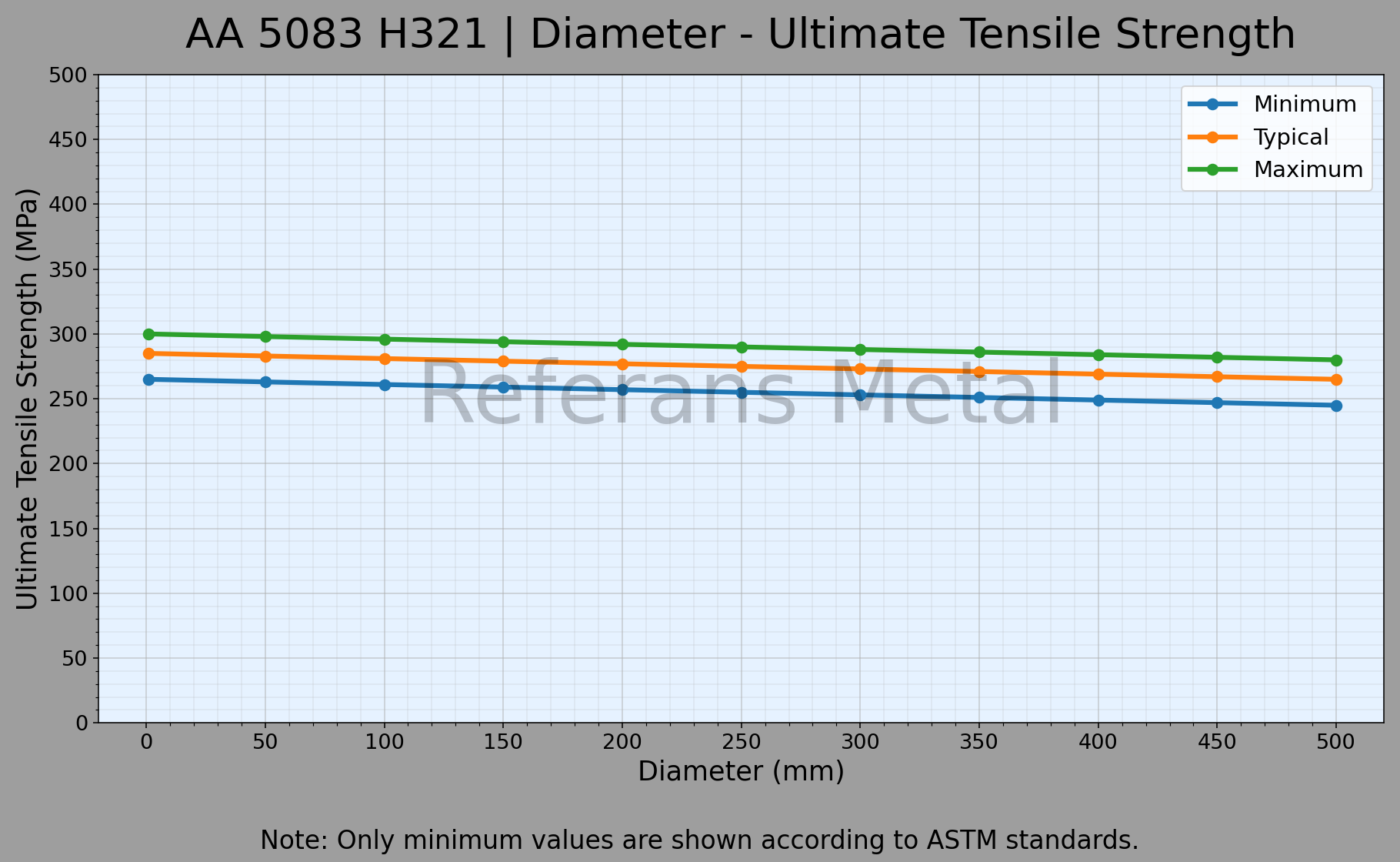
| 5083 H321 Diameter – Ultimate Tensile Strength Graph |
 |
5083 H321 aluminum alloy is a magnesium (Mg) and manganese (Mn) containing material from the 5xxx series, with a stabilized temper condition achieved through controlled stress-relieving processes. The H321 temper provides similar mechanical properties to H32 but offers improved resistance to stress corrosion cracking, especially in marine environments. This alloy is particularly superior in terms of corrosion resistance and demonstrates long-term durability in seawater, saline atmospheres, and aggressive chemical environments. Therefore, it is a critical material in shipbuilding and offshore applications.
In terms of strength, 5083 H321 is among the high-strength alloys in the 5xxx series. Compared to 5083 H111, it provides higher strength and better structural performance. When compared to 5052 H32, it offers significantly higher strength and better seawater resistance. Compared to 6061-T6, it can approach similar strength levels, while providing much better corrosion resistance and especially superior post-weld performance.
In terms of machinability, 5083 H321 alloy is moderate; it is limited for machining but can be easily processed in sheet and plate form. Its bending capability is good, although larger bend radii may be required due to its higher strength. Nevertheless, the risk of cracking is low, and complex forming operations can be achieved with proper processes. Its cold forming capability is balanced and reliable.
In terms of coating capability, 5083 H321 alloy shows good performance, but provides more limited surface aesthetics compared to 5005 alloy in decorative applications. Anodizing can be applied, although color uniformity may vary. It is suitable for painting and other surface treatments. Additionally, it provides good damping capability in terms of vibration response, especially beneficial in heavy-duty applications.
Its weldability is very high and high-quality welds can be achieved using methods such as MIG and TIG. Strength loss after welding is quite low, which provides a major advantage in large structural applications. The 5083 H321 alloy is widely used in sectors such as shipbuilding, offshore platforms, LNG tanks, pressure vessels, defense industry, railway systems, and heavy industrial equipment. It stands out especially in applications where both high strength and superior corrosion resistance are critical.
5083 H321 can be supplied according to the following standards.
• 5083 H321 Plate; ASTM B209, UNS A95083, WNR 3.3547, AMS QQ-A-250/6, DIN AlMg4.5Mn, ISO AlMg4.5Mn0.7
• 5083 H321 Sheet; ASTM B209, UNS A95083, WNR 3.3547, AMS QQ-A-250/6, DIN AlMg4.5Mn, ISO AlMg4.5Mn0.7
Selection Criteria for 5083 H321
- Strength: Excellent
- Machinability: Poor
- Weldability: Good
- Formability: Average
- Corrosion Resistance: Excellent
- Heat Treatment: None
Some Well-Known Applications for 5083 H321
In food industry machinery,
In aerospace and construction sectors,
Used where corrosion resistance is important and very high strength is not required.
5083 H321 is produced and supplied in plate/sheet forms.
- Plate
- Sheet
 Weight Calculator