7075 O aluminum alloy belongs to the Al-Zn-Mg-Cu based 7000 series and represents the fully annealed temper condition. The “O” temper corresponds to the state where the alloy has maximum ductility and minimum strength. This condition is typically used prior to forming operations and can later be heat-treated to achieve high-strength tempers.
In terms of corrosion resistance, 7075 O may exhibit better general corrosion behavior compared to high-strength tempers of 7075, due to the absence of internal stresses. However, it still does not reach the corrosion resistance levels of 6000 series alloys. The risk of stress corrosion cracking (SCC) is very low in this temper, making it a safe condition for forming and processing.
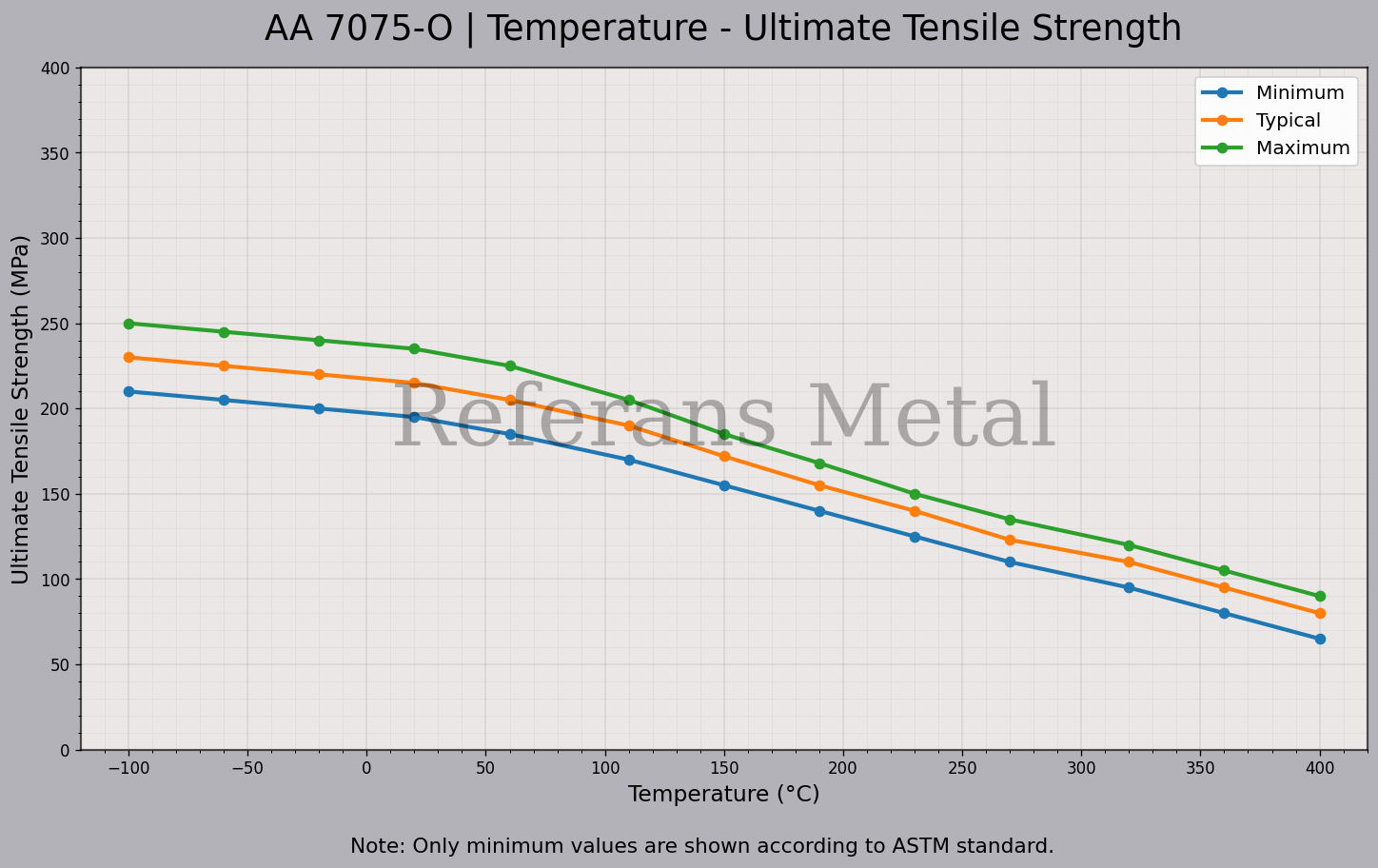
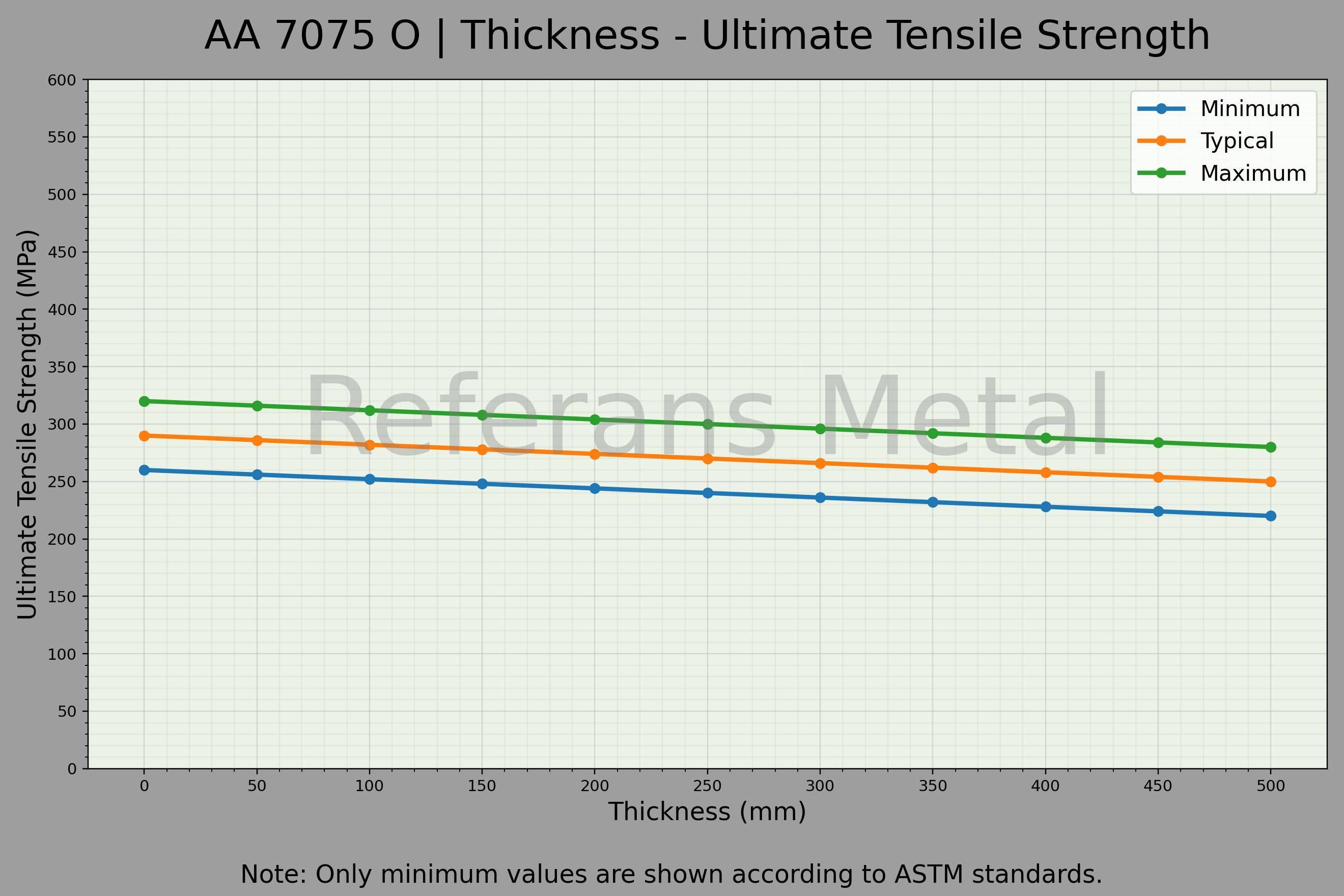
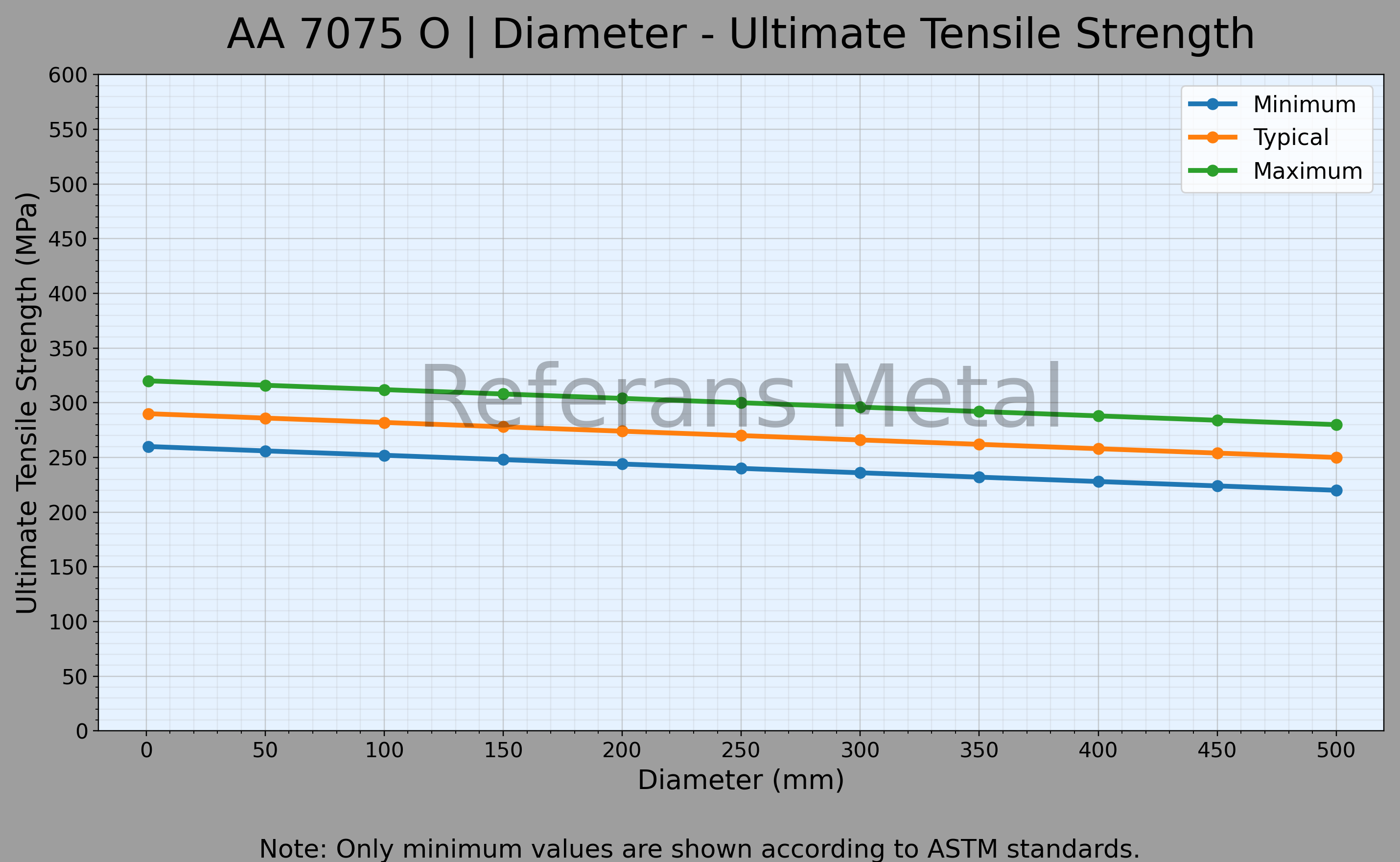
Regarding strength and mechanical properties, 7075 O has the lowest strength among all tempers. Its yield and tensile strength are significantly lower than those of T6 or T7 tempers. In contrast, ductility and elongation are very high. It offers ductility similar to 2024-O and behaves similarly to 7050-O, although 7075 has a higher overall strength potential after heat treatment.
In terms of machinability, bendability, and weldability, 7075 O provides excellent formability and bendability. It is highly suitable for deep drawing, bending, and complex forming operations. Machinability is moderate. Weldability remains limited, as 7000 series alloys are generally not recommended for welding.
Regarding coating ability, vibration behavior, and applications, 7075 O is suitable for anodizing and surface treatments. Its vibration damping capacity is low, similar to other tempers. Main application areas include semi-finished products prior to forming, complex-shaped components, pre-processing stages of aerospace parts, and components that will undergo further heat treatment. 7075 O plays a critical role as an intermediate condition in the production of high-strength final parts.

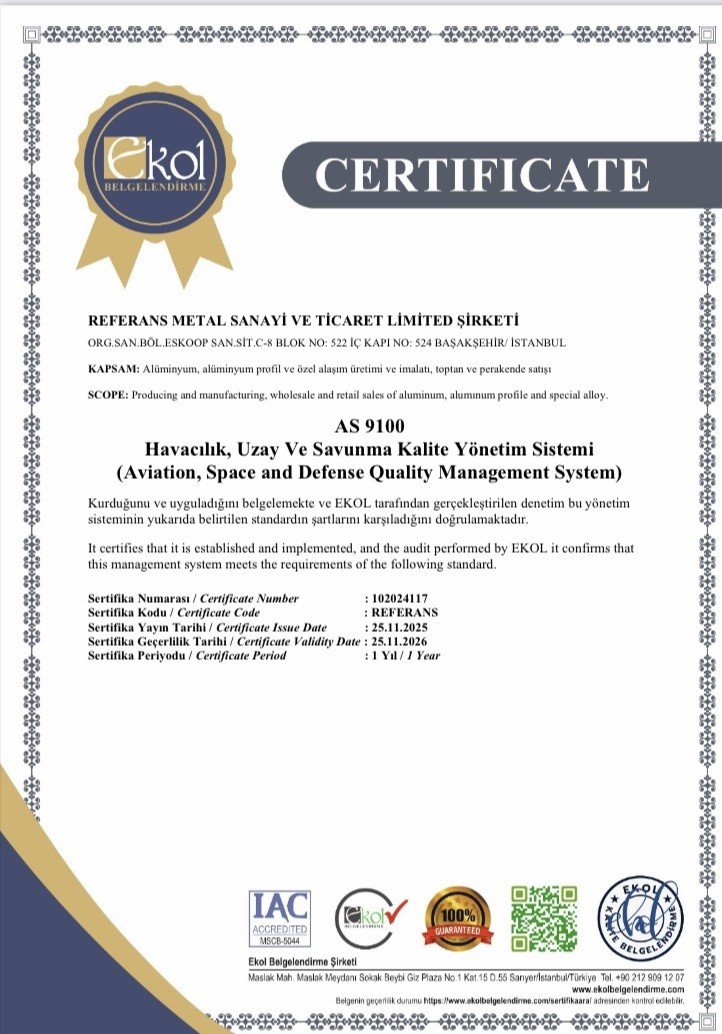 AS 9100
 SPACE 2009
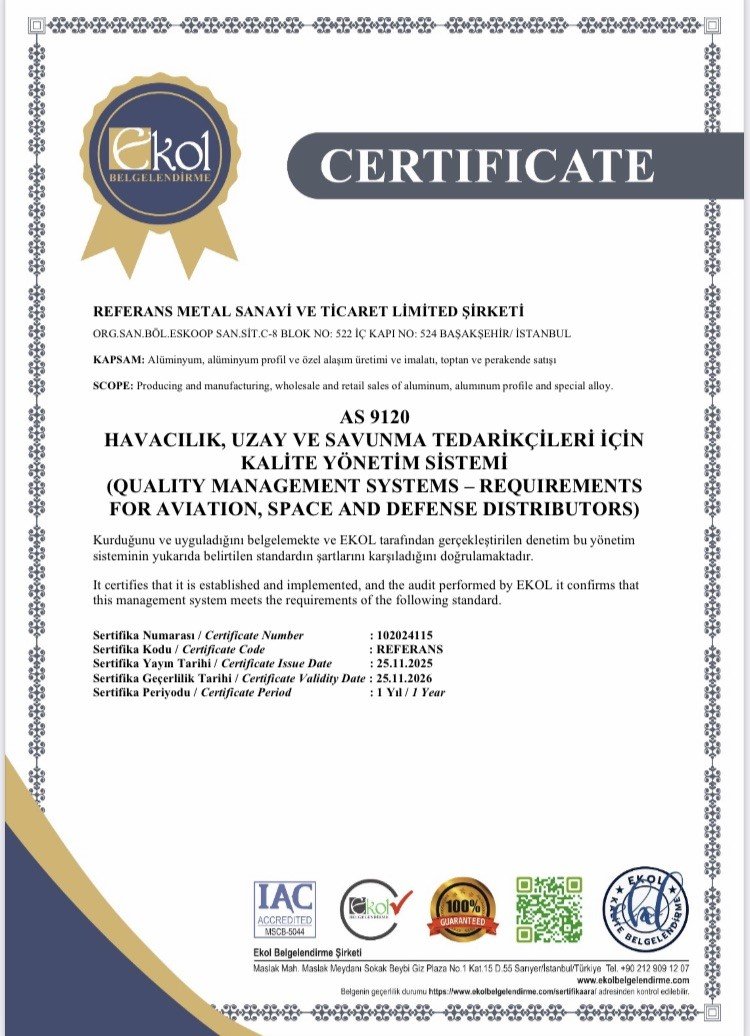 AS 9120




 Weight Calculator