The 2014-T4511 aluminum alloy is a high-strength wrought alloy belonging to the Al-Cu (aluminum-copper) series and is commonly used in engineering applications where mechanical strength is critical. The T4511 temper indicates that the material has been solution heat treated, stress relieved, and straightened by stretching in bar or profile form. This alloy is widely used in aerospace, defense, automotive, and heavy machinery industries. Although it is not as strong as ultra-high-strength alloys like 7075, it provides higher mechanical strength compared to medium-strength alloys such as 6061 or 6082.
In terms of strength, the 2014-T4511 alloy offers high tensile strength and good fatigue resistance. These characteristics make it suitable for aircraft structural components, fasteners, machine shafts, and heavy load-bearing mechanical parts. For example, while 6061-T6 is a versatile general-purpose alloy, the 2014 alloy is preferred for applications requiring higher strength. Alloy 7075-T6 can provide higher strength but often exhibits lower toughness and machinability. Therefore, 2014 alloy provides a balanced option between strength and machinability.
Regarding corrosion resistance, the 2014 alloy is not as resistant as pure aluminum or alloys from the 5xxx and 6xxx series. It can be sensitive to atmospheric and galvanic corrosion. For this reason, it is often protected by surface treatments such as anodizing, coating, or painting. However, when compared with alloy 2024, it offers similar corrosion resistance levels. Its coatability is quite good, and protective coatings or hard anodizing treatments can significantly improve its service life.
In terms of machinability and bending properties, the 2014-T4511 alloy provides excellent machining performance and is considered one of the most machinable high-strength aluminum alloys. This makes it suitable for manufacturing precision machined components. However, due to its high strength, its cold forming and bending capabilities are limited. More ductile alloys such as 5052 can be bent much more easily, whereas 2014 alloy is typically shaped using machining processes.
With regard to weldability and vibration response, the 2014 alloy is not highly suitable for welding and may develop cracking during welding operations. Therefore, mechanical fastening or riveting methods are usually preferred. Its good performance under vibration and fatigue loads makes it suitable for aircraft structures and dynamic load-bearing machine components. Because of these characteristics, the 2014-T4511 alloy is considered an important engineering material in applications where strength, machinability, and structural performance are essential.

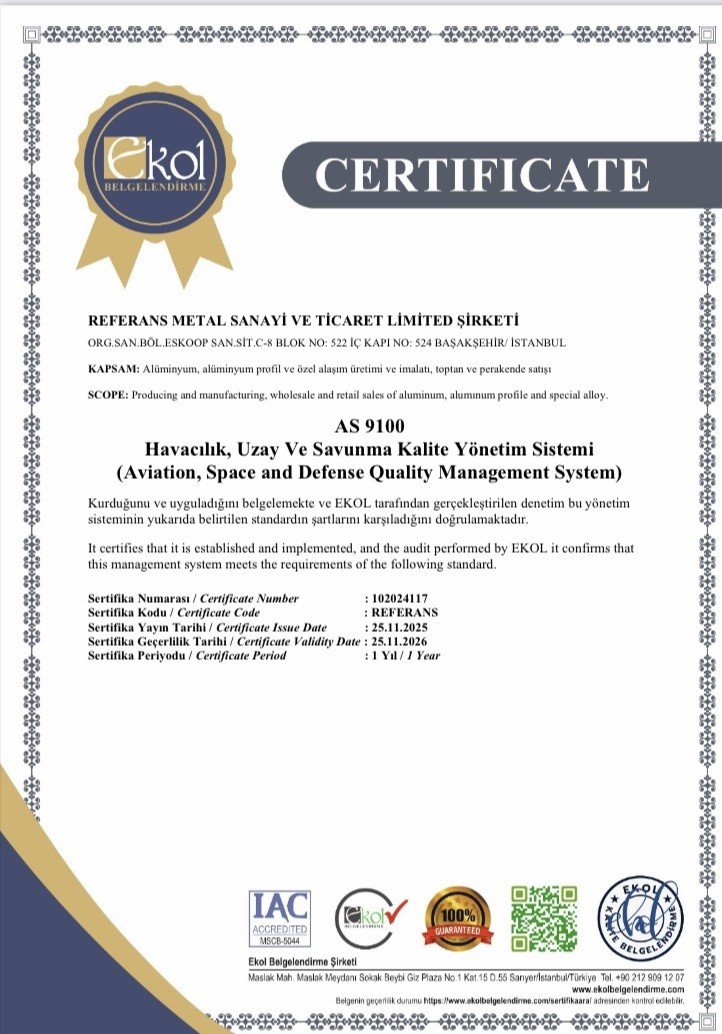 AS 9100
 SPACE 2009
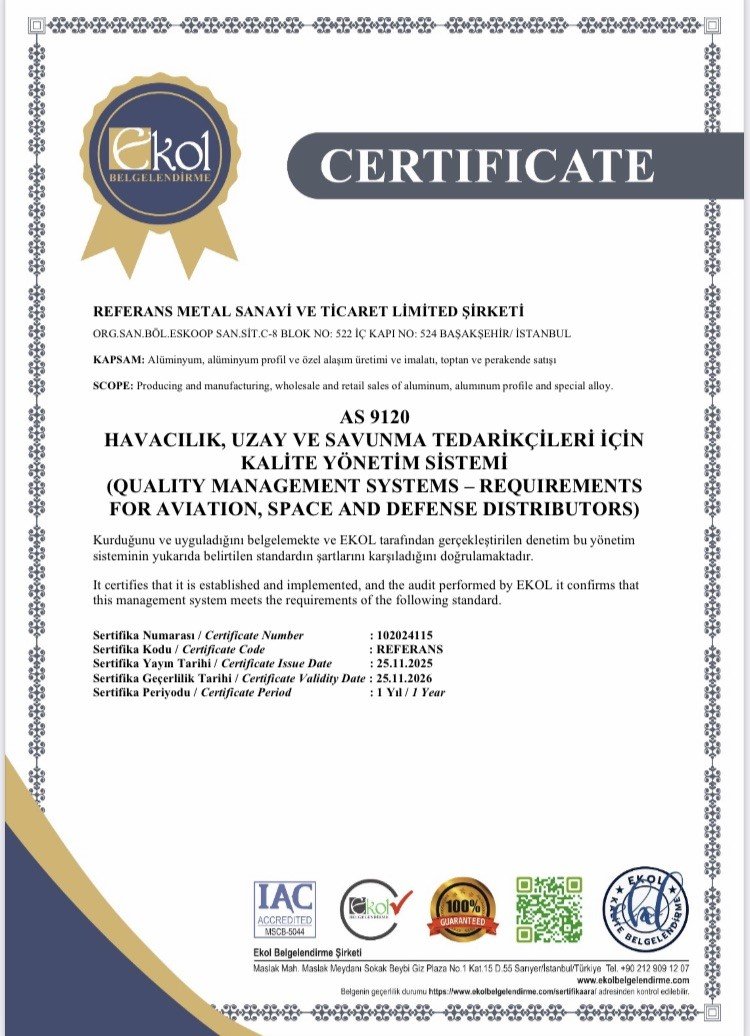 AS 9120




 Weight Calculator