The 2014-T4 aluminum alloy is an Al-Cu (aluminum-copper) based alloy belonging to the 2xxx series, and it is widely used in engineering applications that require high strength. The T4 temper indicates that the alloy has been solution heat treated and naturally aged. This condition provides the alloy with high tensile strength, good fatigue resistance, and balanced ductility. However, its corrosion resistance is generally lower than some magnesium-containing alloys, therefore surface treatments such as anodizing, coating, or painting are commonly applied.
One of the most important characteristics of this alloy is its high mechanical strength. 2014-T4 offers strength levels comparable to 2024-T4, while in some cases providing better machinability. For example, while 6061-T6 alloy is known for its excellent corrosion resistance and weldability, 2014-T4 typically provides higher tensile and yield strength. On the other hand, although 7075-T6 alloy provides significantly higher strength, 2014 alloy can be a more balanced option in certain applications in terms of machinability and cost.
Machinability is one of the strongest advantages of the 2014 alloy. Due to its high copper content, it performs very well in machining operations, especially in CNC machining, turning, and milling processes. However, its weldability is limited, because copper-rich alloys generally tend to develop cracking during welding. For this reason, riveting, mechanical fastening, or bolting methods are commonly used instead.
The bending and forming properties of the alloy are considered moderate in the T4 temper. Although the alloy can be cold formed to a certain extent, it does not exhibit the same level of ductility as many 5xxx or 6xxx series alloys. Nevertheless, its vibration response and fatigue behavior are significant advantages that allow its use in aerospace and defense industry components. The alloy performs well under dynamic loads and is known as a material with high mechanical stability.
2014-T4 alloy is widely used in industries such as aerospace, automotive, defense, and machinery manufacturing. Typical applications include aircraft structural components, fasteners, high-strength machine parts, and load-bearing structures. Compared with 2024, 6061, and 7075 alloys, the 2014 alloy is considered a strategic material choice in many engineering applications due to its high strength, good machinability, and balanced mechanical properties.

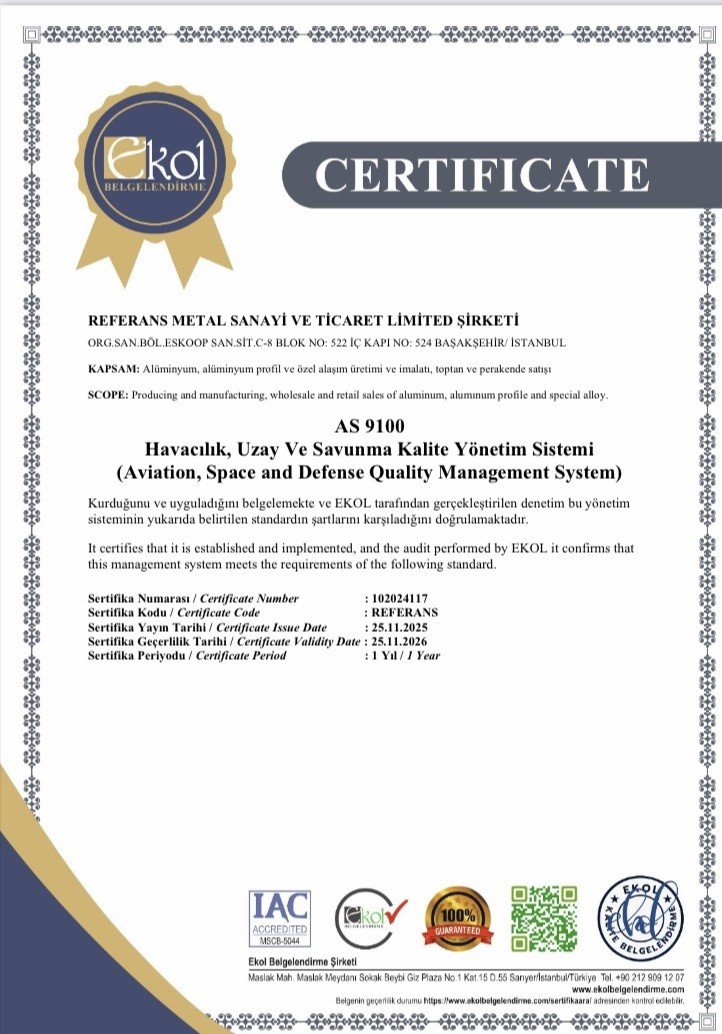 AS 9100
 SPACE 2009
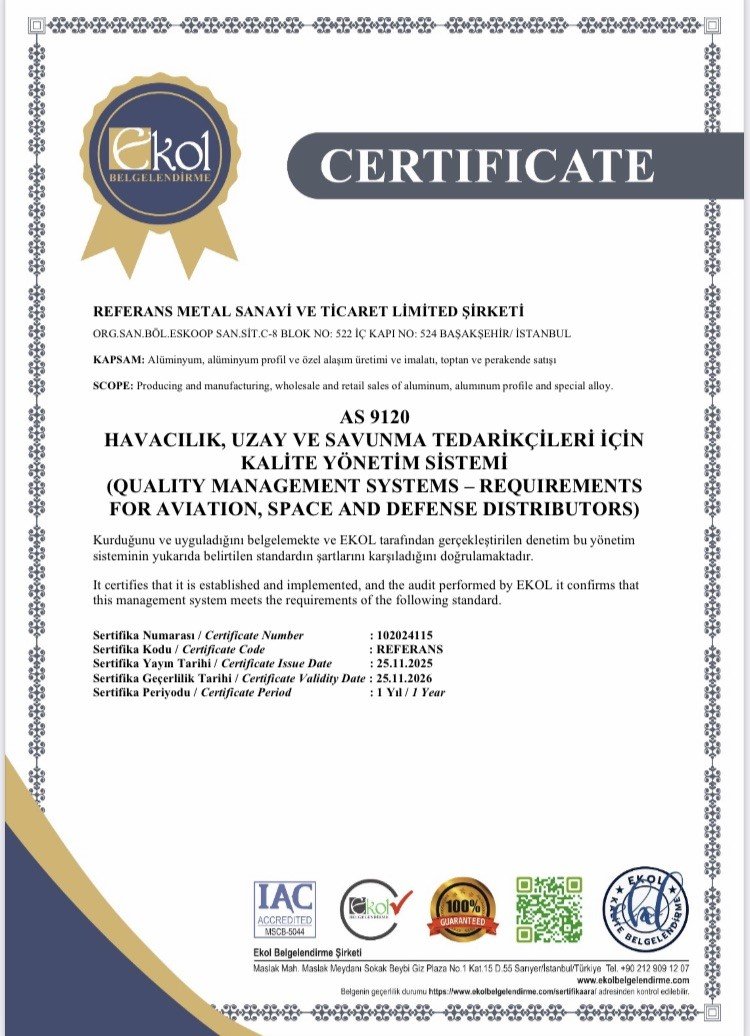 AS 9120





 Weight Calculator