
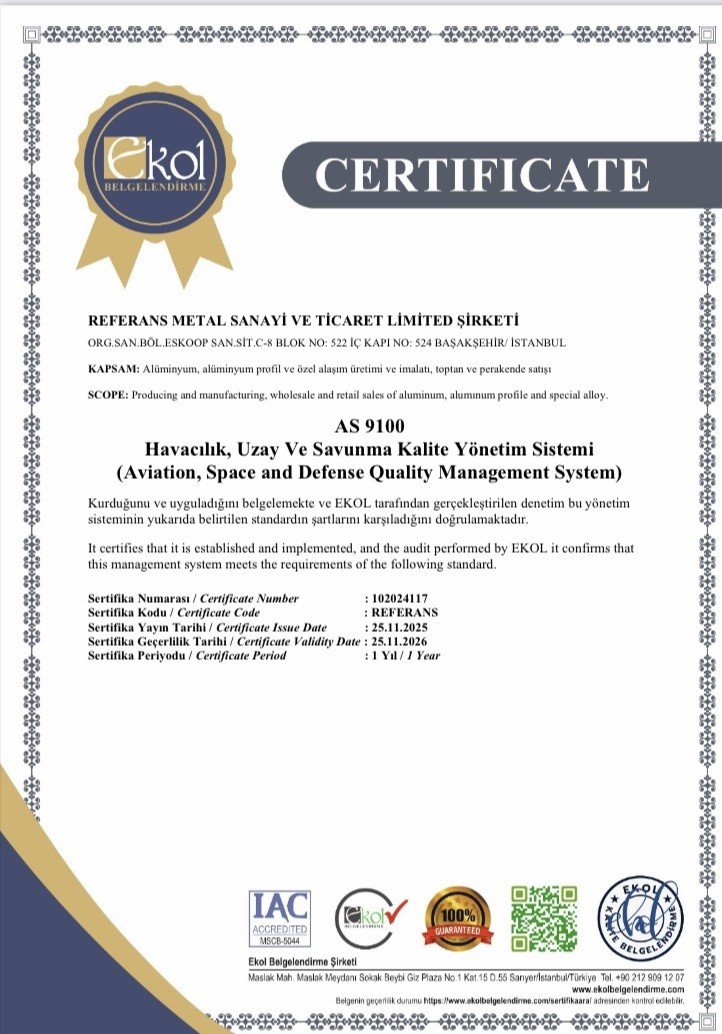
 AS 9100
 SPACE 2009
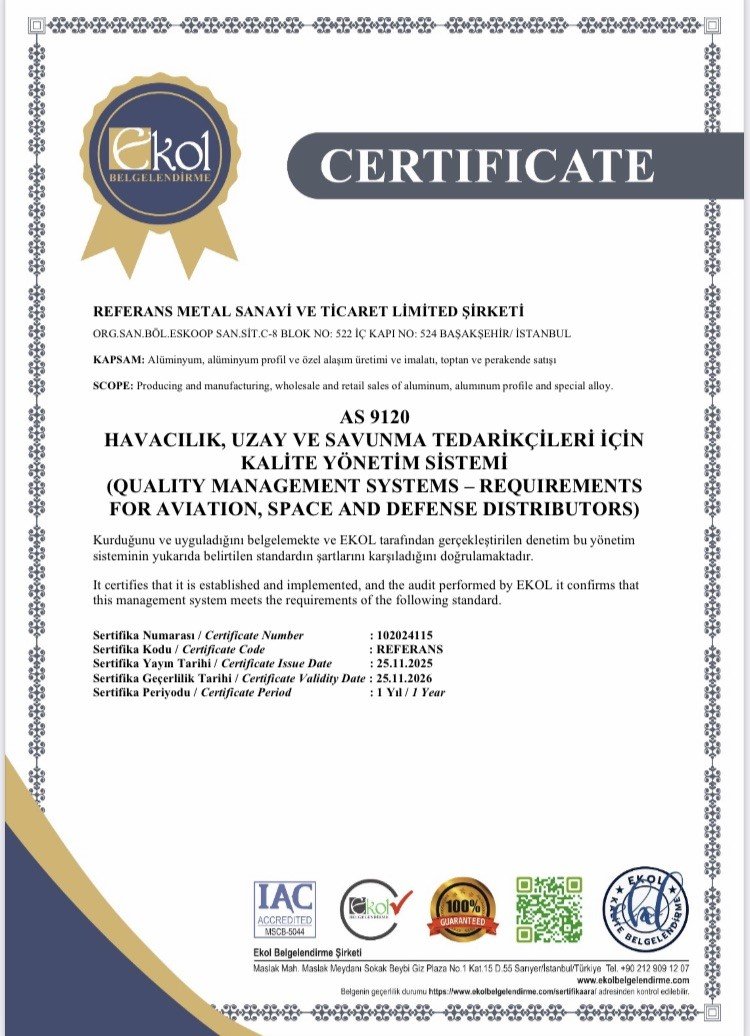 AS 9120


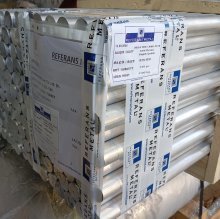


Cold Drawn Round Bar
Cold Drawn Tube
2033
Cold Drawn/Finished (CF) / AW-2033 (Soğuk Çekim) / 2033 / T351
| Chemical Properties | % Value |
| Silicon (Si) | 0,10 - 1,20 |
| Chromium (Cr) | 0,00 - 0,15 |
| Manganese (Mn) | 0,40 - 1,00 |
| Magnesium (Mg) | 0,20 - 0,60 |
| Copper (Cu) | 2,20 - 2,70 |
| Titanium (Ti) | 0,00 - 0,10 |
| Iron (Fe) | 0,00 - 0,70 |
| Zinc (Zn) | 0,00 - 0,50 |
| Aluminium (Al) | Balance |
| Nickel (Ni) | 0,00 - 0,15 |
| Physical Properties | Value |
| Density | 2.78 g/cm³ |
| Melting Point | 502 °C |
| Thermal Expansion | 22,9 µm/m.°C |
| Modulus of Elasticity | 73.1 GPa |
| Thermal Conductivity | 151 W/m.K |
| Electrical Resistivity | 0,046 Ωmm² /m |
| Mechanical Properties | Value |
| Yield Strength | 220 MPa |
| Ultimate Strength | 370 MPa |
| Shear Strength | 283 MPa |
| Elongation A50 mm | 8% |
| Hardness | 95 HB |
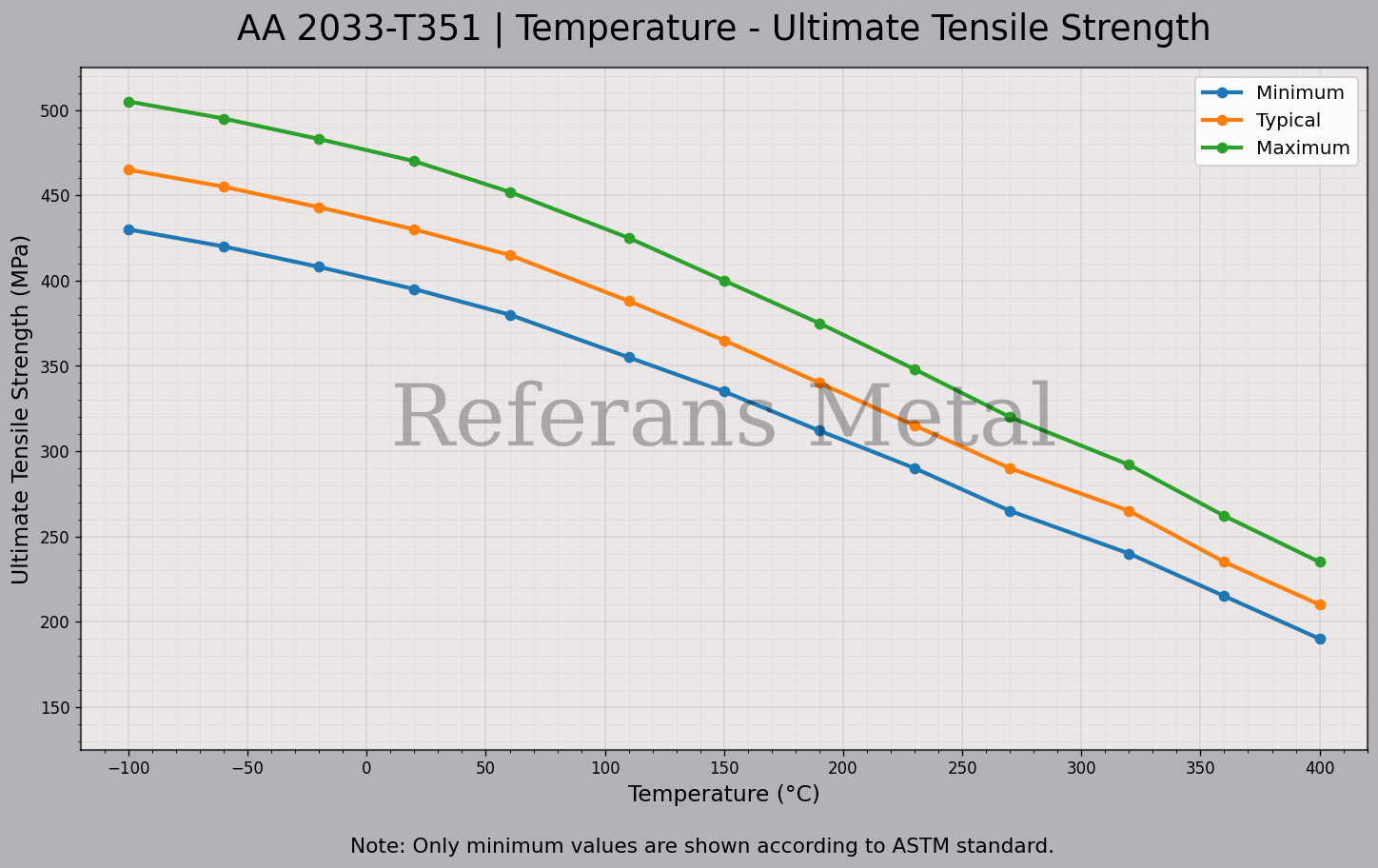
| 2033 T351 Temperature – Ultimate Tensile Strength Graph |
 |
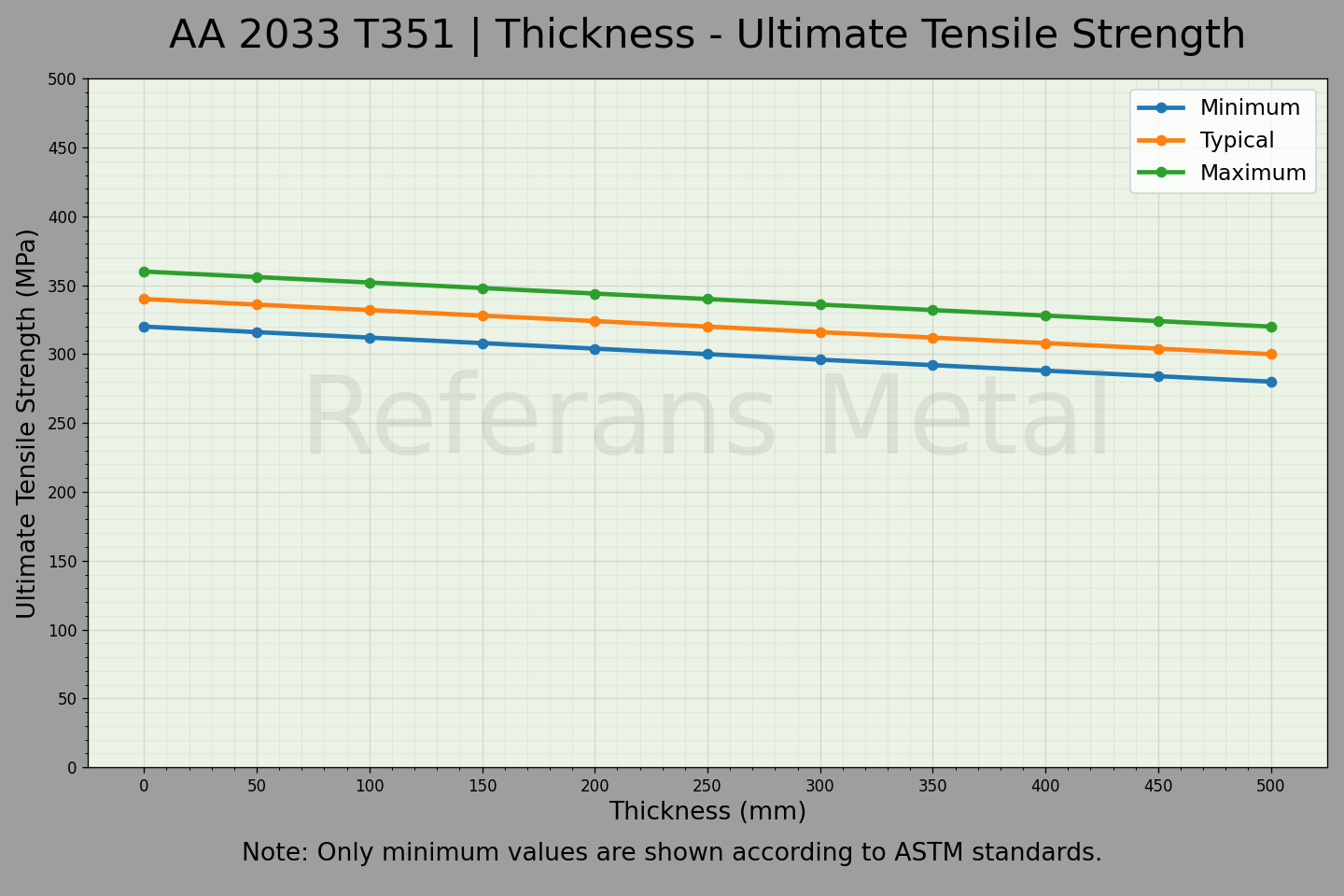
| 2033 T351 Thickness – Ultimate Tensile Strength Graph |
 |
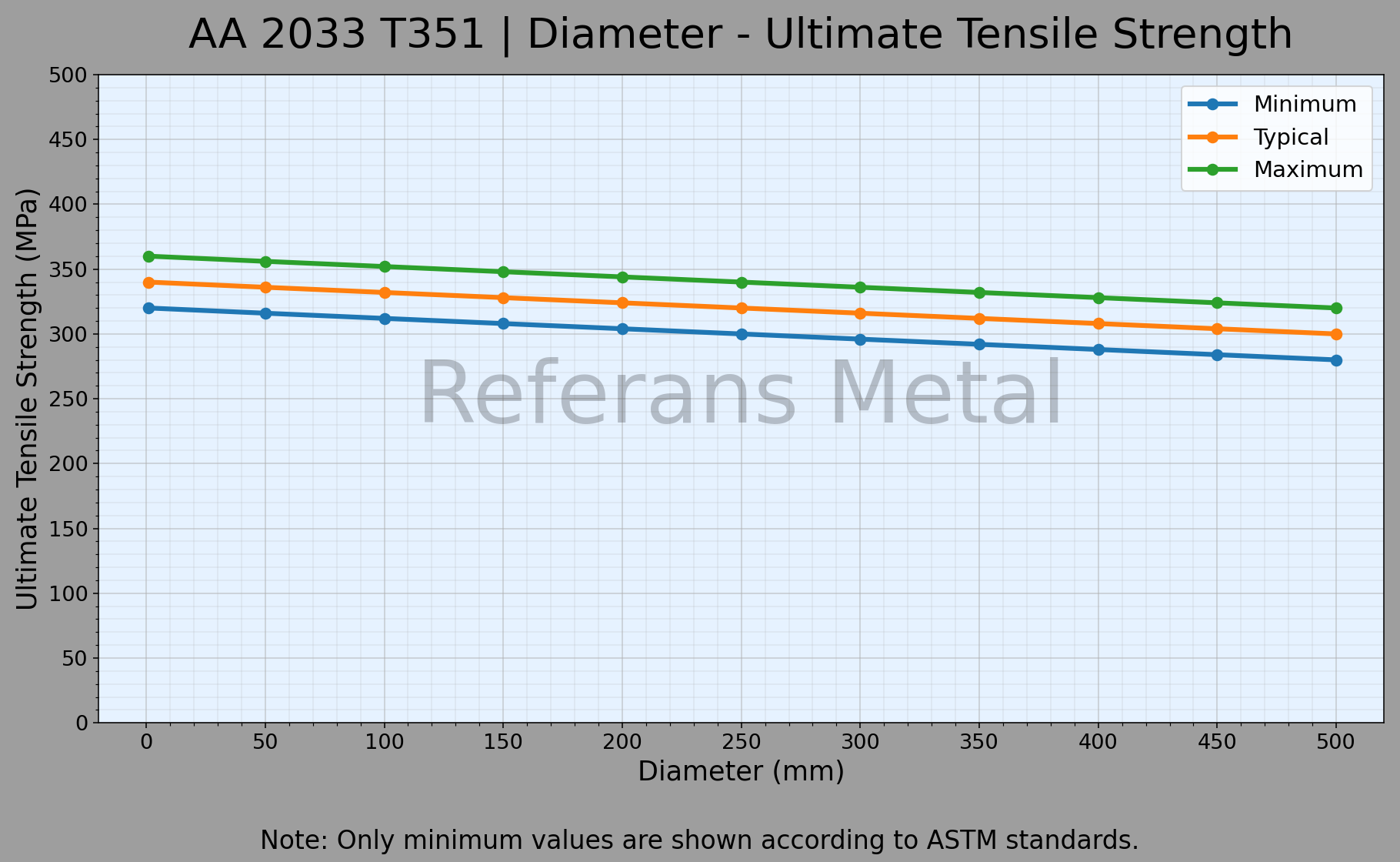
| 2033 T351 Diameter – Ultimate Tensile Strength Graph |
 |
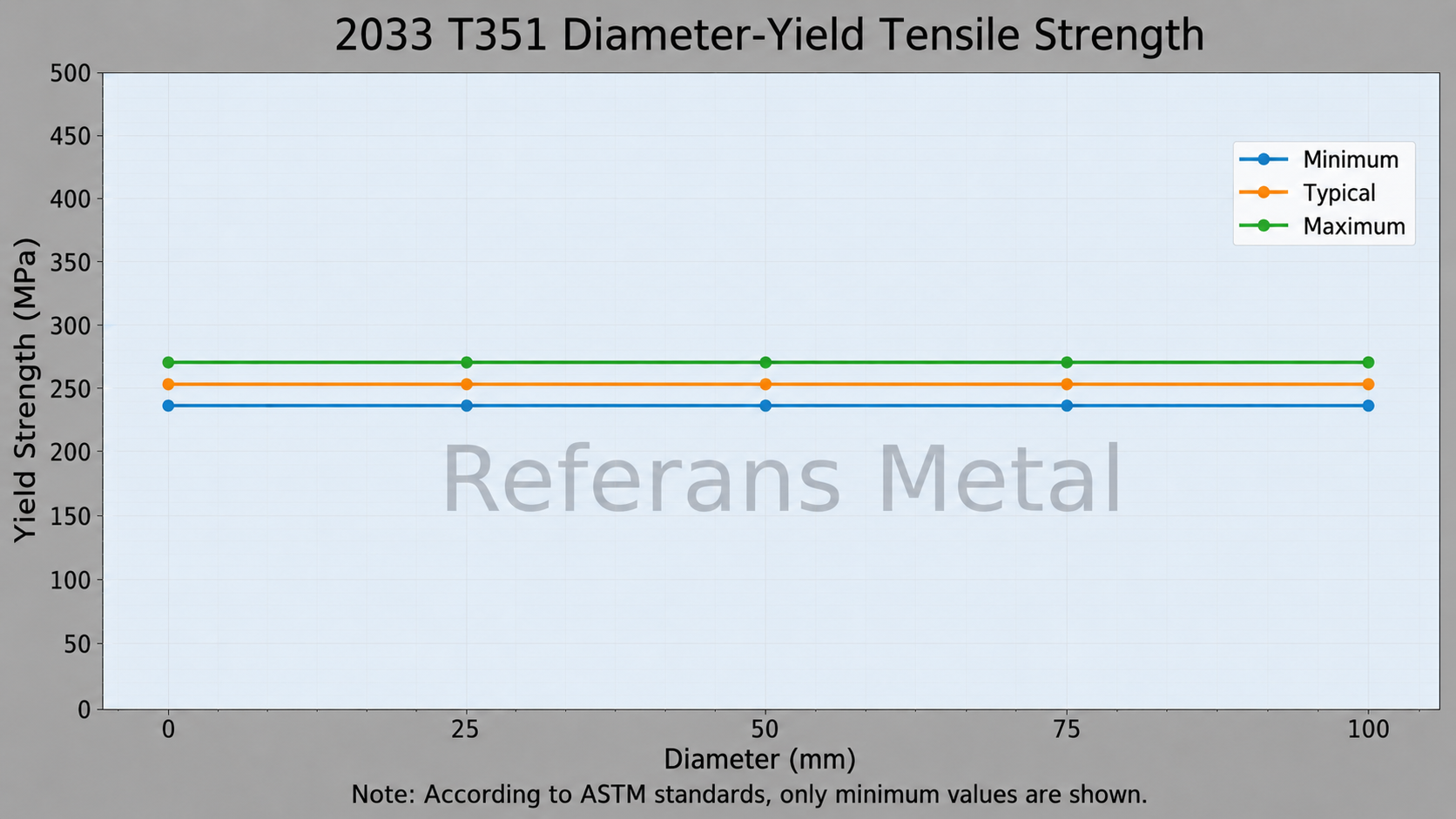
| 2033 T351 Diameter-Yield Tensile Strength |
 |
The 2033 T351 aluminum alloy is an Al-Cu (aluminum-copper) based alloy developed for applications requiring high strength and good fatigue resistance. This alloy is particularly preferred in aerospace and automotive industries and stands out with features such as high tensile strength, good mechanical stability, and a balanced structure after heat treatment. The T351 temper is obtained through solution heat treatment followed by controlled stress relief and natural aging, which provides a homogeneous internal structure to the material.
The corrosion resistance of the 2033 T351 alloy is at a moderate level and is generally increased through surface coating processes. The alloy has very good machinability, providing clean surface quality in machining processes. Its bending capability is limited due to its high strength, but forming is possible with appropriate process parameters. Additionally, its coating capability is high and surface durability can be improved through processes such as anodizing.
The vibration behavior and fatigue resistance are among the most important advantages of the 2033 T351 alloy. It shows stable performance under dynamic loads and is therefore widely used in aircraft structural components. However, its weldability is poor, so joining processes are generally carried out by riveting or mechanical fastening. Due to the high risk of cracking during welding, special techniques are required.
The 2033 T351 alloy has distinct advantages when compared with similar alloys. For example, when compared with the 2024 T351 alloy, it can offer better fatigue performance despite having similar strength levels. Compared to the 2014 alloy, it shows better machinability and more balanced mechanical properties. Although the 7075 alloy has higher strength, 2033 offers better machinability and lower cost advantages.
In terms of applications, the 2033 T351 alloy is especially preferred for aerospace structural parts, automotive suspension systems, defense industry components, and high-performance engineering applications. Thanks to its combination of high strength, good fatigue resistance, and machinability, it stands out as a reliable material in critical applications.
MATERIAL COMPOSITION STANDARDS
2033 T351 can be produced according to the following standards:
• 2033 T351 Cold Drawn Round Bar; 2000/53/EU (ELV) - 2018/740/EU (RoHS II), UNS A92033, ASTM B211
• 2033 T351 Cold Drawn Flat Bar; 2000/53/EU (ELV) - 2018/740/EU (RoHS II), UNS A92033, ASTM B211
• 2033 T351 Cold Drawn Tube; 2000/53/EU (ELV) - 2018/740/EU (RoHS II), UNS A92033, ASTM B210
Characteristic Properties of 2033 T351:
- Strength: Very Good
- Machinability: Excellent
- Weldability: Moderate
- Formability: Significant
- Corrosion Resistance: Low
- Heat Treatable: Yes
Well-Known Applications of 2033 T351:
Gear and splined components,
Defense industry,
Used in forging and press-testing machines.
STOCK
2033 T351 is available in rod / flat bar and tube / profile forms.
- Rod / Flat Bar
- Tube / Profile
 Weight Calculator